Back
Back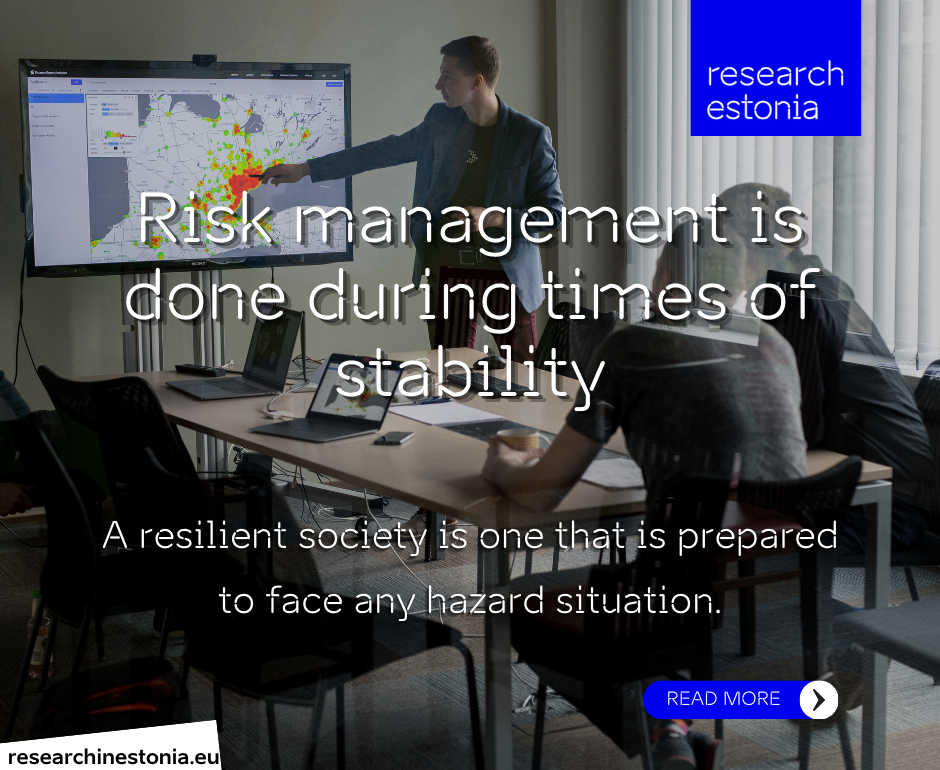
A resilient society is one that is prepared to face any hazard situation, starting from a week-long power outage, and ending with an earthquake destroying cities and rural areas.
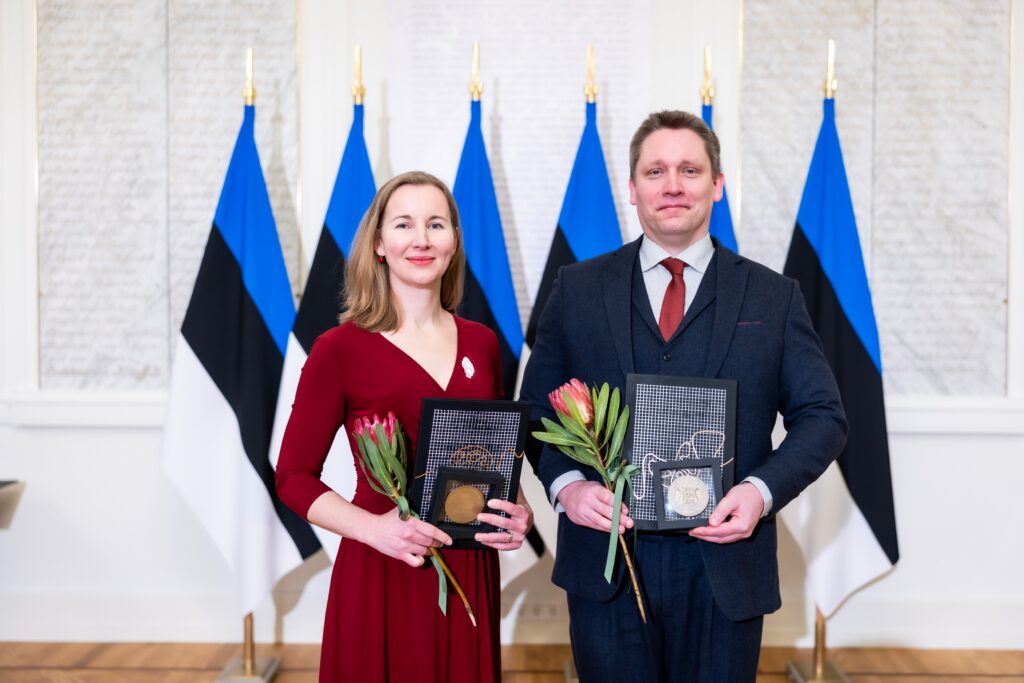
Kati Orru and Sten Hansson won the annual Estonian National Research Award for their series of scientific works titled ‘’Vulnerability to disasters: analysis and solutions’’ that explain how to build resilience and reduce disaster losses. The responsibility lies not only with governments but also with essential service providers and individual households.
Hansson emphasises that the very thing that can lead to disasters is lack of preparation. When the whole world experienced the COVID-19 pandemic, the threat to people’s lives increased largely because hospitals, governments, and people themselves were not equipped to deal with a virus on a scale like this. This is why their ongoing work on risk and vulnerability analysis is crucial. Because the majority of disaster risk management, mitigating hazards or avoiding disasters altogether, should be done during times of stability.
,,The big question is how to ensure that people’s lives, health, property, and the environment do not suffer” says Hansson. ,,That is the greatest contribution that we have made to science. On the one hand, we have published a series of articles that explain how people may get into trouble in different hazard scenarios. And on the other hand, we are thinking about how to mitigate these hazards so that they don’t arise at all in the first place and also improve people’s preparedness to cope with them.”
The central term in Orru’s and Hansson’s work is “vulnerability” which in the simplest terms means that people can face harm due to some kind of a danger realising. Vulnerability or susceptibility is usually tied to disadvantaged groups, such as people with special care needs, a disability, or socioeconomically disadvantaged people.
The mechanisms that put less advantaged people in harm’s way in dangerous situations not only remain but are heightened, although it is not as simple as that–Orru brings out that while elderly people are often considered to be a “vulnerable group”, in certain hazard scenarios it may be the opposite as older people tend to have more life experience and skills and thus resilience in some kinds of disasters, as opposed to younger people who may not be as well equipped.
Hansson brings out that paradoxically, the scientific literature in the field shows that even if people are aware of various hazards and if they have experienced some kind of a disaster before, they often still don’t want to or don’t deal with prevention and preparation. Hansson emphasises that activities that allow people to prevent certain dangers are what should be done not under time pressure during an emergency event but rather all the time.
But not only are the individuals the ones that bear responsibility for risk reduction. Resilience building starts with a pantry stacked with drinking water and canned foods, goes on to local firefighters and whether they are equipped to deal with accidents, fires and floods, and all the way up to international cooperation aimed at preventing war and conflict.
There is always a lot to learn from other countries since each faces different hazards. Hansson brings out how Japan is prepared for earthquakes with advanced hazard warning systems, Portugal has a lot of experience with combating wildfires, and the Nordic countries are prepared for snowstorms with households having snow shovels and municipalities using powerful snow removal machines. At the same time in some other countries, where a little snow falls every five years or so, these few centimeters of snow may mean that life nearly stops because people don’t know how to move around and there are no means to clear the roads. And people don’t have snow shovels. Orru’s and Hansson’s research group has done a lot of international cooperation with scientists and disaster management professionals in countries such as Italy, Germany, Norway, Sweden, Finland, Spain, Portugal, France, and Japan as well as others.
To prepare for various hazard scenarios, the group, led by Kati Orru, has created a novel tool called the vulnerability triage system that supports disaster planning and response. This allows disaster risk managers to analyse various hazard scenarios, mapping which groups should be prioritised, what type of help they need, and whose duty it is to help them. A triage system helps to create concrete plans for future disaster scenarios. Threats can be vague and indistinct which is why playing out different scenarios is crucial. Their research goes as far as analysing different threats occurring at the same time – for example, a natural hazard occurring during a pandemic or a pandemic occurring during war.
On the one hand Orru and Hansson received the research award for publishing a series of high-level scientific publications in international scientific journals but on the other hand the research group’s work in general is vital. Recommendations on how to save people’s lives reach practitioners and decision-makers in this field and help to avoid disasters or mitigate them in order to build a resilient society.
This article is written by Annette Maria Hermaküla. This article was funded by the European Regional Development Fund through Estonian Research Council.
If disaster risk management is largely shaped in times of stability, disasters themselves raise another question: What makes individuals fall through the safety nets during disasters?