Back
Back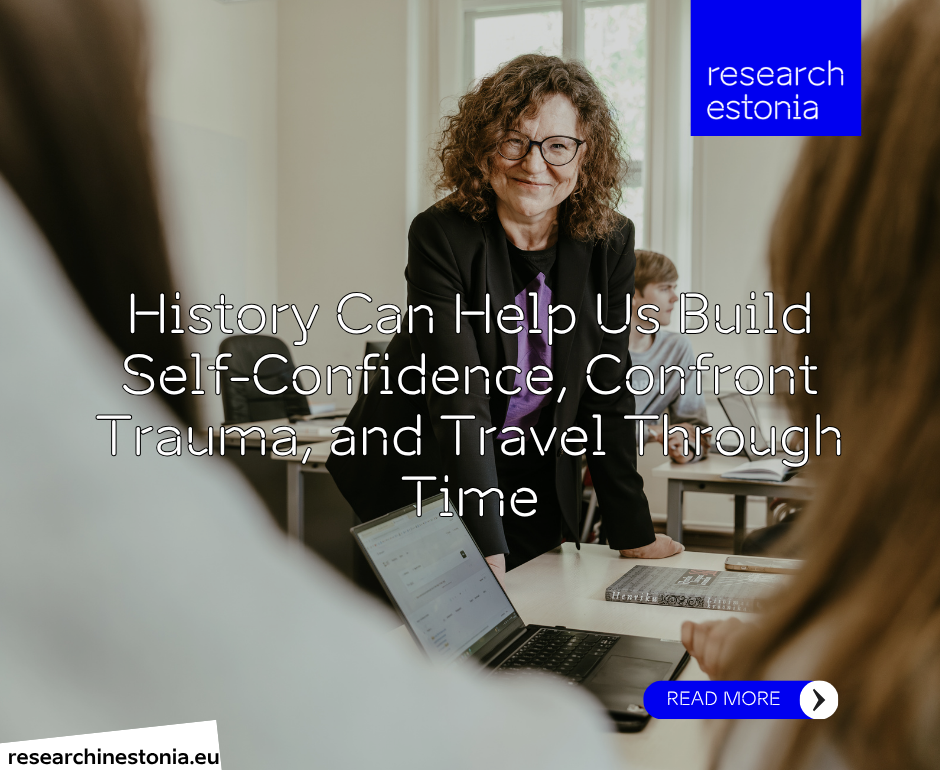
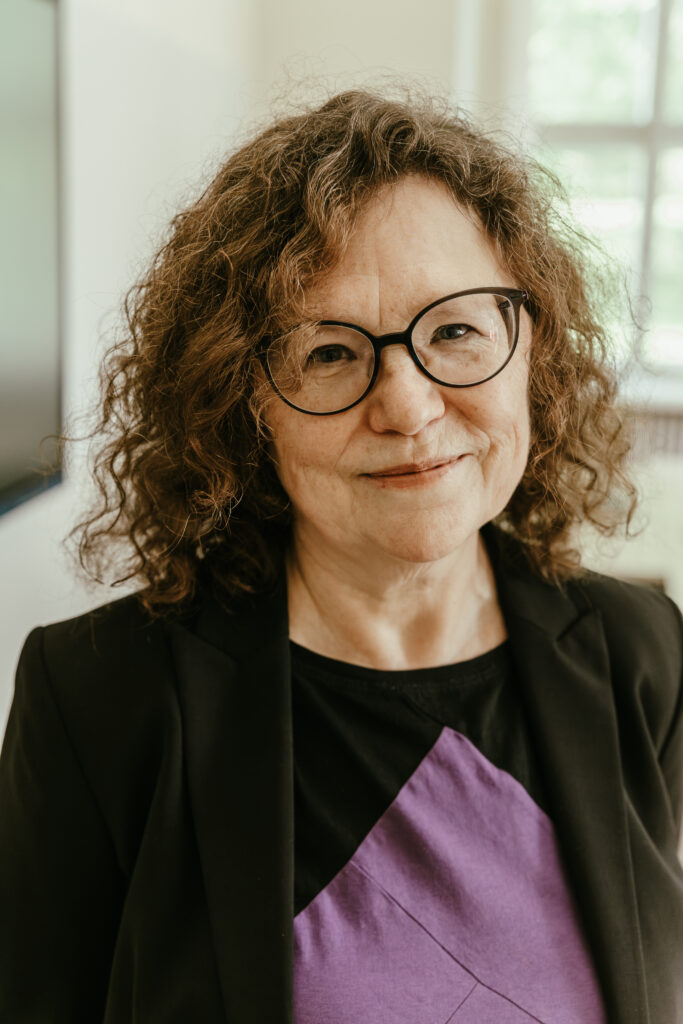
Starting January 1, Aigi Rahi-Tamm will take over as the new head of the University of Tartu’s Institute of History and Archaeology, an appointment that brings with it some changes as, for the first time in its history, the institute will also have two deputy directors that will oversee research and development and doctoral students.
For Rahi-Tamm, the new position is the culmination of a more than four decades-long relationship with the university, which she entered as an undergraduate in 1984. She later earned her bachelor’s, master’s, and doctoral degrees from the university and served as the head of its Department of Archival Studies from 2014 until the time of her new appointment.
As an academic, her research has focused on the controlling mechanisms in society in the period of Sovietization in Estonia in the 1940s and 1950s, as well as Estonians’ war experiences during the First and Second World Wars. In her archival studies, she has specialized in the interpretation of sources and source criticism in general. Research in Estonia recently met with Rahi-Tamm at the University of Tartu Library’s café, to discuss her new role, how she copes with studying traumatic wartime experiences, and the value of studying history.
Why did you decide to study history? What did you love about it?
When I first came to the University of Tartu to study, I had three main interests. One was law, but I decided no, I wasn’t about to start learning Soviet law. Then I considered psychology, but at that time it might take more than two years to get accepted. It just didn’t work out. But then I thought that with history, I could think for myself a lot. It would allow me to move between periods of time. I didn’t even think about studying 20th century history. My interests were in earlier periods. I even considered archaeology.
You came to the university in 1984, so before the restoration of Estonian independence, before glasnost and perestroika. What was it like to study history at the University of Tartu back then? What was the atmosphere like?
I think it depended a lot on who the history professor was. But we had very Estonian-minded professors like Sulev Vahtre, Helmut Piirimäe, and Herbert Ligi. Dormitory life was a very big part of it, and we would also hang out at the university library café, which was upstairs. We spoke quite freely with our instructors. The atmosphere was quite different. The older students took the younger ones under their wings, they treated them kindly. They explained to us who our professors were, what they were like, which ones were more ideological, which ones were more grounded. We learned to read between the lines, which is something that today’s students don’t know how to do at all. Sometimes today I’ll have my students read the same passage with me and then we’ll discuss how we understand its meaning. I show them how certain words can be interpreted in different ways, how there are differences in the way these words are expressed.
But things changed quite a lot. Was the shift in instruction gradual or sudden?
Some things were quite sudden. I started in 1984 and finished my bachelor’s degree in 1990. At the end, we had a big history exam, but the exam material didn’t reflect what we had initially been taught. So, the students took out the Encyclopaedia Britannica and began reading up on different subjects that we knew would be on the exam. We would get together in the evenings, and this is how we relearned history in about a month. I am talking about the general history of Russia, for example. But we had only learned about the February Revolution and October Revolution. We had learned Communist Party history, but not real Russian history.
When I think about when I was an undergraduate, I was very focused on where I was, why I was here, who I was. The border was right here before me. I knew I could never leave the borders of the Soviet Union, and it always made me think. Why couldn’t we leave? What did I have to do to leave? I understood that I could read, study, and think myself out of the place I was in. History provided me with the opportunity to journey into other times. It was like time travel. Even now, I like to just sit down here in a café with a cup of coffee and watch people. I think about them, where they come from, where they are going. It’s just one little moment here. There is what came before us and after us. That’s the value of history.
You are the first female director of the institute in the university’s history. What do you think about that? Is history a male-dominated discipline?
I have thought about it. When I started studying history at university, there were 30 students in our class, 10 of which were female. There were always more boys. At some point, it changed, and it was almost reversed. But at last year’s admission, there were more boys than girls. I think it goes in waves. I do want to ask the students who just enrolled why they decided to study history though. I won’t ask now, but in a few years after they have studied and they better understand their own decisions.
There is a lot of focus on science, technology, engineering and mathematics (STEM) and applied studies in general. Some might ask, why study history at all?
I would ask in response, who are we doing these applied studies for? Aren’t we doing them for people? History is the most complicated object of study. The variations and patterns are incredibly wide. It’s a very complex area. No matter what we study, we always form groups and put ourselves in different roles. We look at things from the perspectives of those in power, or everyday people. That means one has to have a good ability to adapt and think in different ways.
Often we think as people that we are so vulnerable, but I might ask, why aren’t we more self-confident? Where can we learn such self-confidence? By studying what has happened in the past, what our experiences have been, what the generation before us did, or two generations before us. In a way, we are studying a picture of ourselves. How do we use it though? That’s the question. When we talk about the Soviet takeover in 1940 and how people reacted, I can see how quickly some of them adapted to new circumstances. If people don’t know their own past or haven’t made sense of it, they can adapt quite quickly. But if they have principles, an understanding of their past, it’s harder to get rid of these things so quickly.
You have focused on studying the Soviet period and mechanisms of control. But most media at that time reflected state propaganda. How do you find reliable material to study?
In the Soviet period, everything was supposed to be perfect. I remember in the 1970s, there was a terrible train accident in Võru, where I grew up. Many people died and nobody was allowed to discuss it in the press. So a lot of researchers find it hard to get material to study. You have to think of where the information might be collected. If there is an accident, then maybe you should look in the archives of the Ministry of the Interior. But the ministry had so many departments, you will have to look at its structure at the time to determine which department might have handled it. You have to read through hundreds of pages. Usually, I do some preliminary work, then I start to read. I get one puzzle piece and then I start to look for another. You also have to check your data. As they say, there are statistics, and then there are Soviet statistics. Summaries were often written to reflect the desires of those in power, not on the basis of real data. So you always have to check. You have to try to determine what the real situation was at the time.
The topics you research – war, mass deportations – are certainly emotionally challenging. How do you cope with researching these traumatic events?
It was the fall of 1990 when I first came into contact with lists of those deported. These were the first lists that we started to enter into a database. We typed up all the names, family members, birth years, then I would see who was deported, what year. I was so young, and I didn’t know much about the topic either, and then I would see those names in my dreams for half a year. The names haunted me.
Being a historian is sort of like being a doctor, I think. You have to create a defensive barrier. You have to protect yourself. I must admit, I’ve broken down a few times, and in the moments when I least suspected it. I think that I am familiar with the topic, I have done a lot of research into the security apparatus, but it’s still quite emotional material. When I work with those documents, I have to take breaks. Some of the material is beyond what you can even imagine. Once I was being interviewed on the radio and I started to feel that my eyes were wet and realized that I was crying. We needed to take a break. I wonder to this day what it was that made me suddenly break down. These are the kinds of research topics that you can’t ever prepare yourself for. I don’t have a specific recipe for how to protect yourself.
At the same time, when you read with emotions, you do notice a lot of things. I go into the time, I try to understand the person, imagine them, read along with them. Then there is the hope that I can understand them better. How did they relate to those in power, how did they relate to their community? How else can you assign meaning to these things?
How has war impacted your activities? Are you able to access any material in Russia?
There’s no cooperation at the moment. It stopped when the war started. But I had been to the archives in Moscow and Saint Petersburg and even in Siberia, in Omsk, Tomsk, Novosibirsk. Material about those who were deported is kept there. In regards to the archives in Siberia, one portion has since been sent elsewhere, another has been destroyed because of a lack of interest in the Soviet era. ‘No man, no problem,’ as Stalin would say. But we should have gone to the Russian archives much more often when we had the chance, as now there’s no cooperation at all.
We did have cooperation before. There were also joint projects between the Estonian, Latvian and Russian archives. But that doesn’t touch on the Soviet period, but on the tsarist period. It’s impossible to study the tsarist period without access to the archives in Saint Petersburg. The material is there. It’s a question of who administered in the region where the information was collected. If it’s about the Swedish period then the material is in Sweden. Thus, Estonian history is scattered across many archives.
How is the digitalisation of archives going, especially when you have so much material?
The subject of digitalisation is very exciting, but what are we digitalising for users? Our priority has been all the genealogical material, because it has the most users. If you check who is using the archives, it’s people looking up their relatives. But then there are state programs, topics, and there are agreements on what will be digitalised in a year. For example, National Archives coordinates the archives of Soviet-era creative associations, cultural and research institutions within the framework of the Ministry of Culture’s action plan. Researchers can also contribute to digitalisation themselves. They have very good digitalisation tools in the archives.
It’s one thing to have the documents, it’s another thing to use them. We also collaborate with language researchers to learn how the Estonian language has developed over time. Using keywords, they can search through the digitalised material, for example.
When you were appointed to this new position, did you already have goals in mind or do you think you’ll take time to ease into the new role and then discuss any changes?
It wasn’t my ambition to take on this role at first, but after it was suggested to me, I decided to consider under which circumstances I would do it. That first, I would like there to be two deputy directors, so I wouldn’t be alone. I already know what pressures the university landscape is under. But there are so many questions and I don’t know what the best solutions are. It would also help to have a team with different generations. I definitely wanted younger teammates.
What makes history at the University of Tartu stand out?
At the moment, we are engaging more in interdisciplinary work. Archaeology is particularly strong here, including areas such as archaeochemistry and collaboration between archaeology and chemistry (Ester Oras, Mari Tõrv). There is also cooperation with geneticists, such as Aivar Kriiska and Mait Metspalu (director of the Institute of Genomics), as well as with geologists and textile researchers like Riina Rammo. We should actively seek out and develop these collaborative opportunities. That said, I would emphasise that our work on the study of the Middle Ages or Estonian history is especially strong.
What are your main goals in your new role?
My role requires looking at the bigger picture. One important aspect is administration: how we teach and how our research is developing. I also agreed to take on this leadership role on the condition that I would have two deputy directors. Working closely with them allows us to identify problem areas and address key challenges, such as scientific development and securing funding. This includes applying for Estonian grants, finding additional projects, and increasing cooperation.
Our doctoral students often feel quite isolated. We need to support them better and take care of good people. One deputy director, Mihkel Mäesalu, focuses mainly on working with doctoral students, attracting strong candidates and improving how we teach and mentor them. Mari Tõrv has agreed to take on the role of the deputy director for research and development, focusing on developing projects, deciding which ones to pursue, and strengthening our research profile. These are major pressure points for us, but by working together, we can find better and sometimes alternative solutions. In this context, involving younger scholars with fresh ideas is essential. People like Mari and Mihkel bring new perspectives. Things are changing very fast, and we need to change along with them.
This article is written by Justin Petrone. This article was funded by the European Regional Development Fund through Estonian Research Council.
If history teaches us to read between the lines, archaeology invites us to read between the layers – discover how in The Archaeological Project “Lost and Found Past.”