Back
Back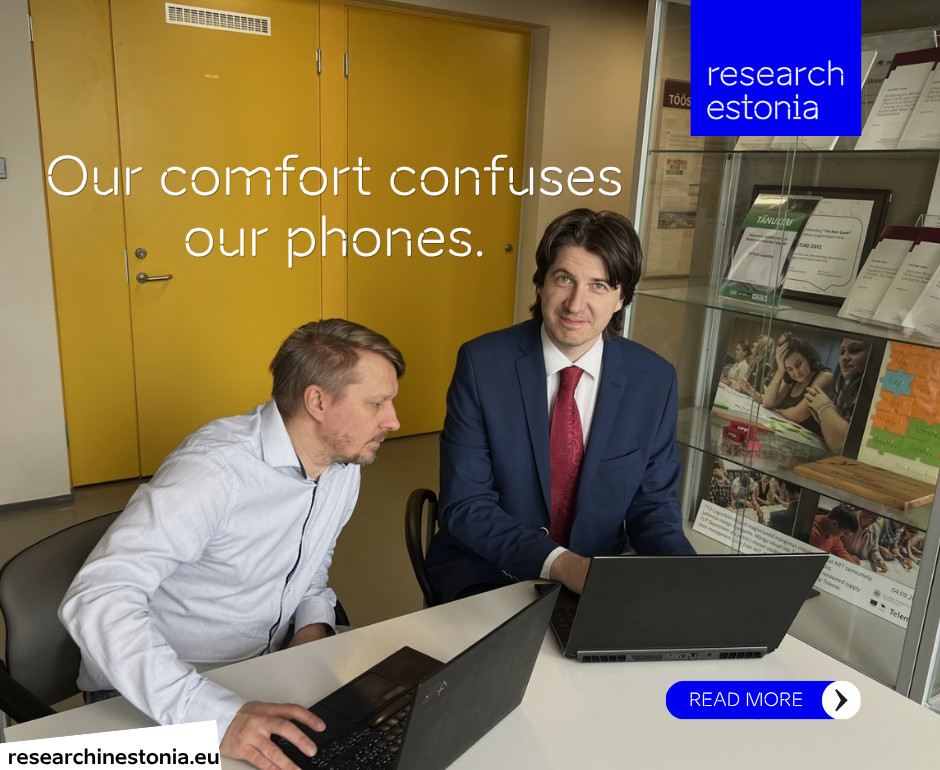
Table of Contents
Estonian researchers found why wifi drops on trains, and what to do about it.
Europe is moving from polluting planes to trains. By 2050, the high-speed rail traffic should triple in the European Union.
Most of us wouldn’t mind whooshing across the continent on a high-speed train, as long as it has a good internet connection, right? We expect it to be as good as at home. We’re spoiled like that.
But the video calls drop in the middle of the forest, the movies freeze in smaller villages, and all we can do is look out the window and hope our phones and laptops come back to life, not really knowing when or how it’ll happen.
Researchers and extreme logistics connectivity experts from Tallinn Technological University wanted to see what actually happens to a connection on trains and why it drops. They conducted a unique study in its narrow field.
“Cell complexity, the number of different signals at a given moment on a moving train, has not been studied before,” Tanel Jairus, Tallinn Technological University (Taltech) researcher, explained. “It’s not a very researched area.”
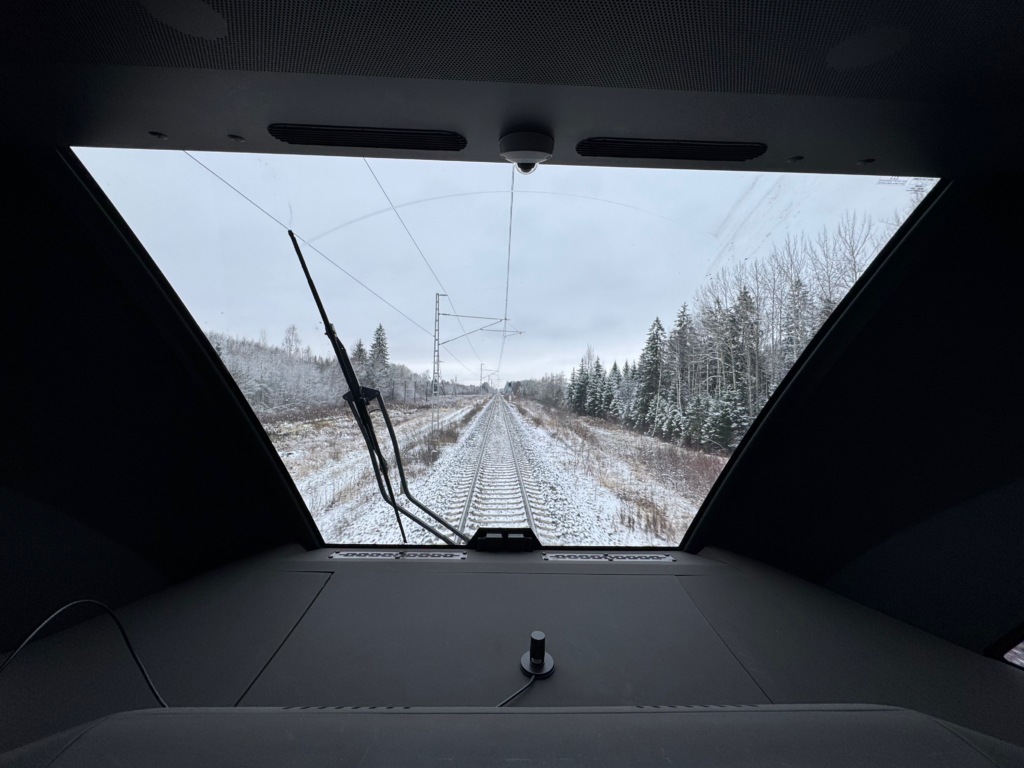
At the end of last year, they tracked 13.7 million 5G radio signals across 370 km of Estonian railway corridor. The data revealed “unexpected patterns”.
And the reason for bad connection wasn’t only speed. The researchers saw that the connection dropped even more often during lower speed, between 54–66 km/h.
They concluded that the connection doesn’t drop only because of the speed as often thought. The reason is the chaos, the confusion, that happens when our phones send out radio waves to the nearest cell towers, all at once.
The problem is the complexity of having too many overlapping cell towers competing for the connection, rather than the high speed of the train, Estonian researchers concluded in the recently published article in Multidisciplinary Digital Publishing Institute.
“With trains, many [devices] suddenly end up in a place where usually there are no users at all,” explained Jairus. For two minutes, there are 500 people in a single cell tower’s coverage area. Two minutes pass, and then they’re gone again.”
Jairus added: “There is always coverage on the railway. The problem is that everyone’s devices reach the edges of the connection of one specific cell tower at once. It’s like there is a signal, but there also isn’t.”
Jairus and his colleagues from Taltech specialise in similar extreme logistics connectivity situations. The same communication “chaos” happens during concerts, on ships, or planes.

railway corridor. The data revealed “unexpected patterns”.
Photo credit: Private Collection
More cells doesn’t mean better connection
Typically, similar studies use simulations with few cells. In the real world, in very dense railways, there could be over a hundred visible cells in one location. And increasingly more as the EU is upgrading its communication system to a 5G-based connection. 5G travels on a higher frequency that doesn’t reach as far, increasing the need for even more cell towers.
But simply creating more cells wouldn’t solve the connectivity problem on trains. “Too many cell towers can actually hinder the connection,” said Kati Kõrbe Kaare, a researcher at Tallinn Technological University.
Devices get confused. They have too many choices.
“Everyone wants a lot at once,” Jairus added.
The Rail Baltic and environmental footprint
The three Baltic nations are building a new high speed railway to connect all three Baltic states. The Taltech researchers’ study is the first such study in the Baltics, and could prevent many wasteful investments.
Reducing the environmental footprint is something companies in Europe are eager to do. There are financial incentives if you lower greenhouse gas emissions.
“Many German companies have made new rules. If your business trip is less than 1000 kilometers away, you are not allowed to fly there. You would have to take the train,” Kõrbe Kaare said.
What could help with the connection on trains?
The goal for the team, led by Riivo Pilvik, is to create a sort of matrix, a blueprint, to help with connectivity issues in extreme situations.
For trains, instead of more cell towers, repeaters should be used. “And the location of the masts needs to be reviewed,” Kõrbe Kaare said. The special antennas should be attached and directed towards the train.
So that there would be connections around the railways, but not anywhere else.
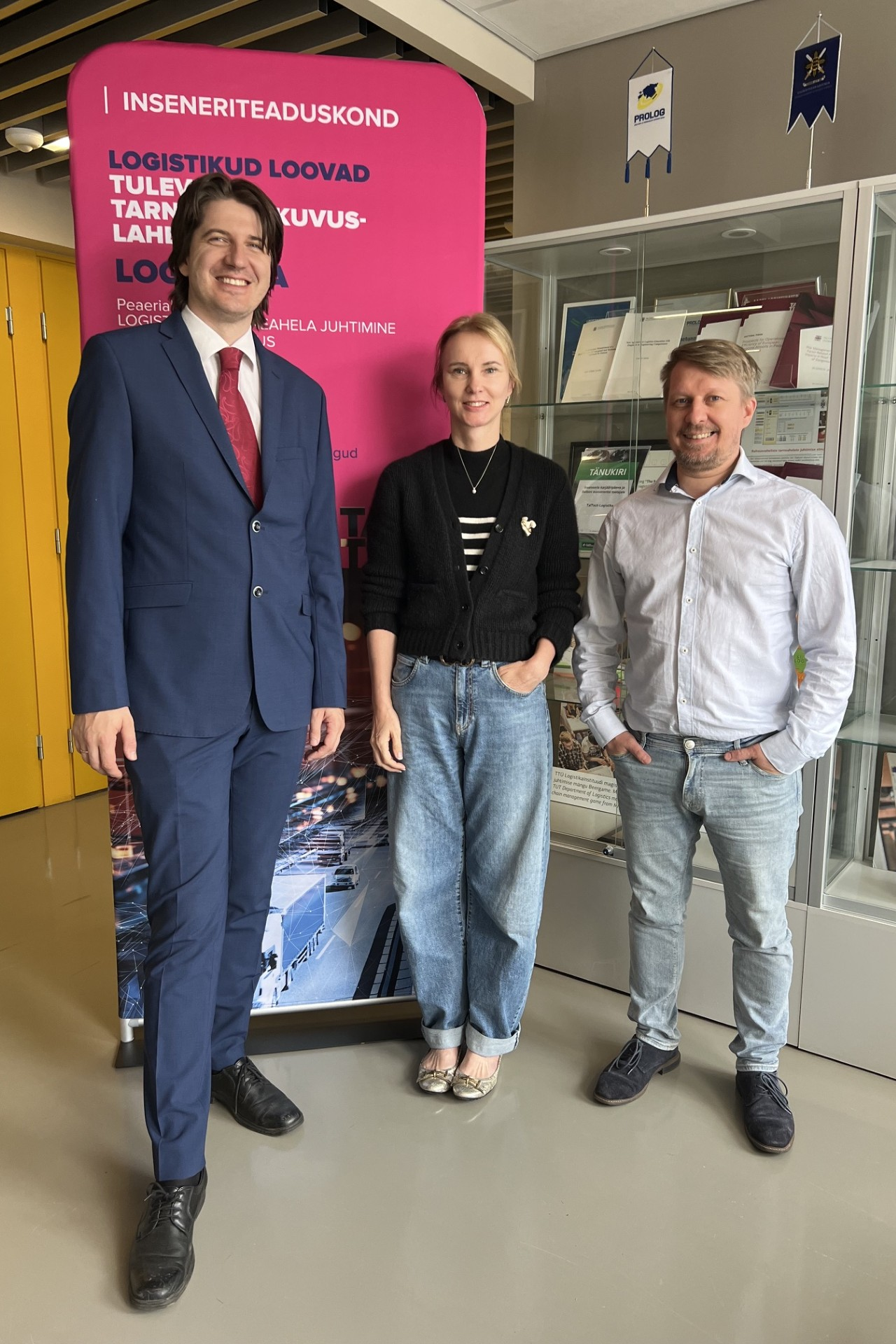

Getting this right requires letting go of standard solutions. As research team lead Riivo Pilvik emphasises, a railway is an “edge-case logistics operation” that demands entirely new technological, economic, and risk evaluations.
“Generic approaches are just not optimal,” Pilvik added.
Because if we want to reduce our carbon footprint and encourage people to opt for trains instead of flying, then a good internet connection is a powerful incentive.
SIDEBAR: Extreme Logistics Connectivity
TalTech researchers Kati Kõrbe Kaare and Tanel Jairus emphasize that railways are just one piece of a much larger puzzle. In logistics, information is everything. If the connection drops, the entire operation halts.
Their research group, led by Riivo Pilvik, is mapping “extreme logistics operations” to create a resilience blueprint for situations where maintaining a connection requires special intervention:
- At sea: Ships often lack regular mobile coverage due to international regulations, forcing passengers to rely on ferry Wi-Fi. Unlike railways, the solution for maritime transport actually is increasing the number of base stations. In the future, ships could even act as mobile relay stations to provide uninterrupted connectivity for rescue drones.
- Rescue operations: When a major emergency strikes, like a large forest fire, the sudden influx of rescue personnel can instantly overload the limited cell towers in rural areas.
- Mass events: During massive concerts or festivals, the pure density of devices can completely overwhelm local networks, leaving the audience unable to make mobile payments.
- Cross-border transit: Traveling across national borders forces devices to switch networks. Maintaining an uninterrupted connection during this handover is critical, especially for extreme scenarios like medical professionals consulting or operating online while in transit.
This article is written by Marian Männi. This article was funded by the European Regional Development Fund through Estonian Research Council.
From confused phones on trains to wearables interpreting light beneath the skin, Estonian researchers are giving invisible signals a little more order: Smartwatch-like device could help detect plastic particles in the human body.