Back
Back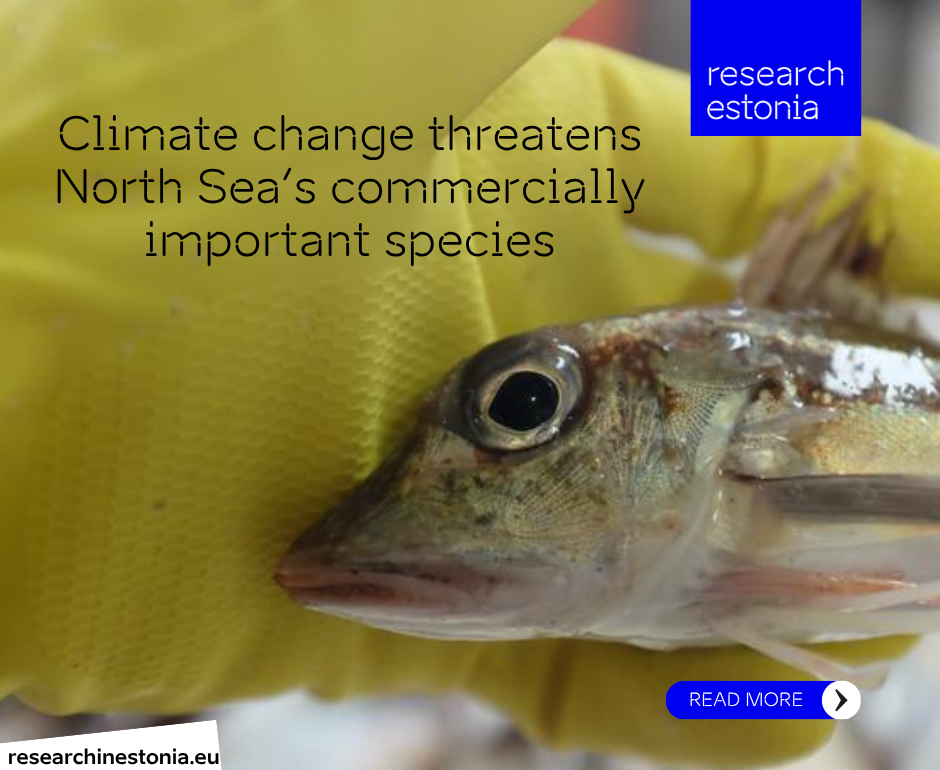
The North Sea is one of the most rapidly warming marine ecosystems in the world. This, coupled with extensive fishing pressure, is forcing fish adapted to colder seas to move further north or into deeper waters. New research finds that early protective measures are needed to conserve large-bodied motile fish in the North Sea area.
German scientists have been collecting data from the Dogger Bank, a shallow sandbank located in the central North Sea, for the last 32 years. Researchers now used that data to look at how the species of invertebrate and fish found there have changed, and to assess possible future trajectories.
They evaluated 101 species and found that 72% of species exhibited time-lagged responses, where environmental conditions had already changed, but the species had yet to react. Large-bodied and motile species were more often in extinction debt, a situation where species persist under suboptimal conditions. At the same time, smaller and less motile species exhibited immigration credit, meaning that the local conditions are suitable to them, but they remain absent.
For example, several ecologically and commercially important fishes, such as the tub gurnard (Chelidonichthys lucerna), grey gurnard (Eutrigla gurnardus), cod (Gadus morhua), and whiting (Merlangius merlangus), are persisting in the North Sea, although the warmer the sea gets, the less suitable the conditions are for these species.
Diego Pires Ferraz da Trindade, Research Fellow in Macroecology at the University of Tartu, said that although the study found no net loss in the number of species, which creates an illusion of stability, the effect of global changes in the North Sea is driving a slow but consistent shift favoring smaller-bodied species adapted to warmer waters.
But according to Randel Kreitsberg, Associate Professor in Ecotoxicology at the University of Tartu, there is still a chance to act. “We found that species locally lost in warmer sites are still suitable to local conditions and can still potentially recolonize their former sites if optimal conditions are met again.”
Kreitsberg stressed that understanding delayed biodiversity responses to global changes is crucial for nature conservation. “These delayed responses and potential compositional shifts may weaken the food chain and affect ecosystem resilience. Identifying species showing signs of immigration credit can help anticipate future biodiversity trajectories and inform conservation planning.”
This article was sent to us by the University of Tartu.
If this article warmed your curiosity more than the planet, keep reading! Our next piece explores how Dark biodiversity helped solve Darwin’s 160-year-old puzzle.