Back
Back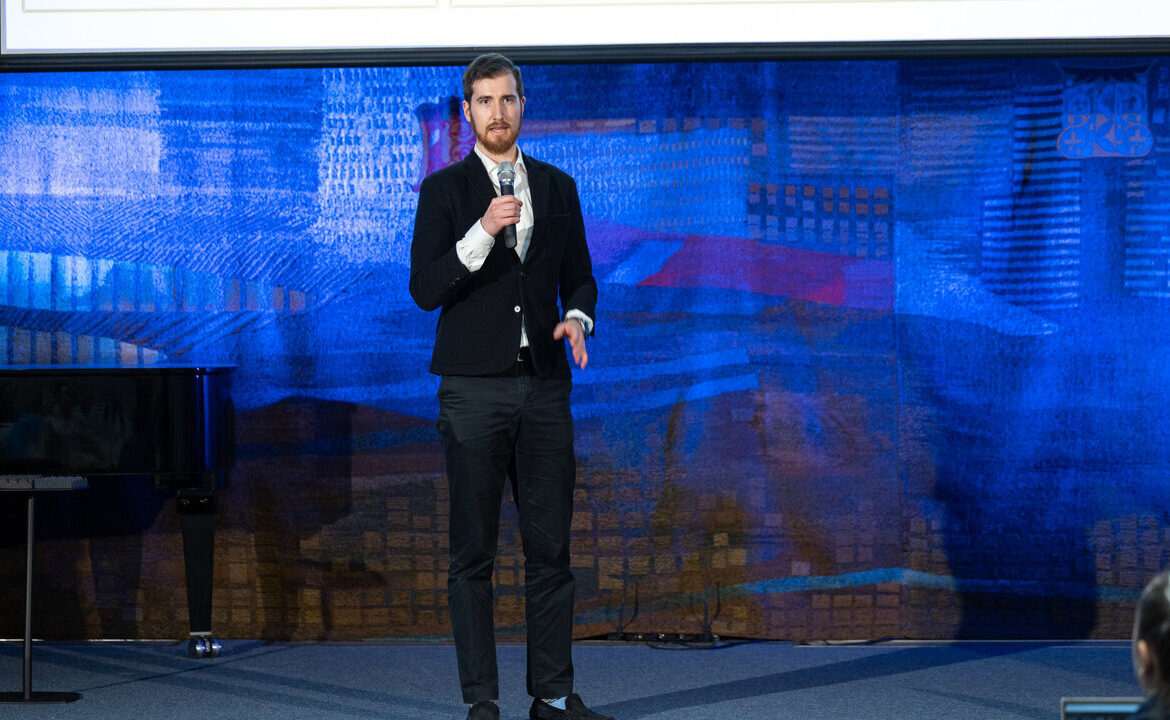
The University of Tartu’s Institute of Pharmacy is developing bioprintable nanofibers that help repair bone tissues. By using this technology there is possibility in the future to heal bones much faster without side effects.
There are millions of people worldwide that suffer from bone fractures. Some of these fractures are so large that they cannot heal on their own. Currently these large fractures are surgically treated by placing either the patient’s own bone or bone from a donor into the fracture to make the bone heal.
That is very problematic because of several reasons. Firstly, to be able to heal the first bone fracture, it creates another injury to the patient. Also, there is a shortage of donor bone. Besides that, the bone from the donor may cause the body’s immune system to attack it. Lastly, there is the problem of trying to fit the removed bone into the original fracture site. It simply does not fit. Imagine trying to fix bone with something where the extraction causes pain and harm. Body’s immune system may reject it, and that it does not even fit properly.
Therefore, there needs to be a better alternative that fit the sample perfectly and don’t cause the immune system to attack it and heal the bone much faster. Johannes Olavi Schavikin’s research is about creating a new synthetic, 3D bio printable material that can be encased with the patient’s own cultured bone cells. By using the patient’s own cells, the immune system won’t attack them.
The technique that he is using features the combination of two manufacturing methods: 3D-bioprinting and nanofibers. 3D-bioprinting means that the material is 3D-printed into specific shapes that fit the patient’s fracture site perfectly, like a glove. The word ”bio” there means that there are cells inside the printed structure. The cells then grow and produce bone inside and around the printed shape.
Moreover, to boost the process further I have added nanofibers with also cells on them. The nanofibers mimic the native environment where the bone cells live and also, much like steel bars in concrete, provide additional mechanical strength.
Altogether, this new 3D-bioprinted material together with the nanofibers, provides a new way of being able to heal bone much faster without the fear of immunological attacks. Therefore, I hope that this research will contribute to the welfare of all the millions of people.

Video: https://uttv.ee/naita?id=38501
Video of machine: https://www.youtube.com/watch?v=hBpIvTihVAE
Presentation at University of Tartu Faculty of Medicine’s conference: https://meditsiiniteadused.ut.ee/sites/default/files/2025-09/Teesivihik_2025.pdf
This article is written by Johannes Olavi Schavikin, who is a Junior Research Fellow of Pharmaceutical Nanotechnology at the University of Tartu and was written as part of the 3-Minute Thesis Competition.