Back
Back
Led by University of Tartu researchers, the largest and most comprehensive study to date has been completed on how genetic differences between individuals influence metabolism.
Published in Nature, the study provides a far more detailed picture than ever before of which genetic variants shape human metabolic traits – from amino acids to blood glucose and cholesterol.
The study involving more than 600,000 people was made possible by combining data from two unique biobanks – the Estonian Biobank at the University of Tartu and the UK Biobank – both of which include genetic data and, now, metabolic measurements. The combined dataset enabled University of Tartu researchers to identify rare genetic variants associated with metabolic markers (metabolites), which are detectable only in datasets of several hundred thousand individuals. It also provided strong confidence that the discovered associations are accurate and reliable.
“Metabolic markers found in blood, such as different types of cholesterol, are very useful for creating personalised risk scores because they reflect a person’s health status and lifestyle choices. This is information that genetic data alone cannot reveal,” explained Priit Palta, Professor of Translational Genomics. He added that the new layer of metabolite data in the Estonian Biobank will enable the use of existing genetic and health data more effectively and broadly in health research.
The computational side of such a study is just as important as the biology. Analysing millions of genetic variants against hundreds of biomarkers requires powerful computing resources and precise statistical methods, which is why bioinformaticians at the University of Tartu’s Institute of Computer Science played a key role in the collaboration.
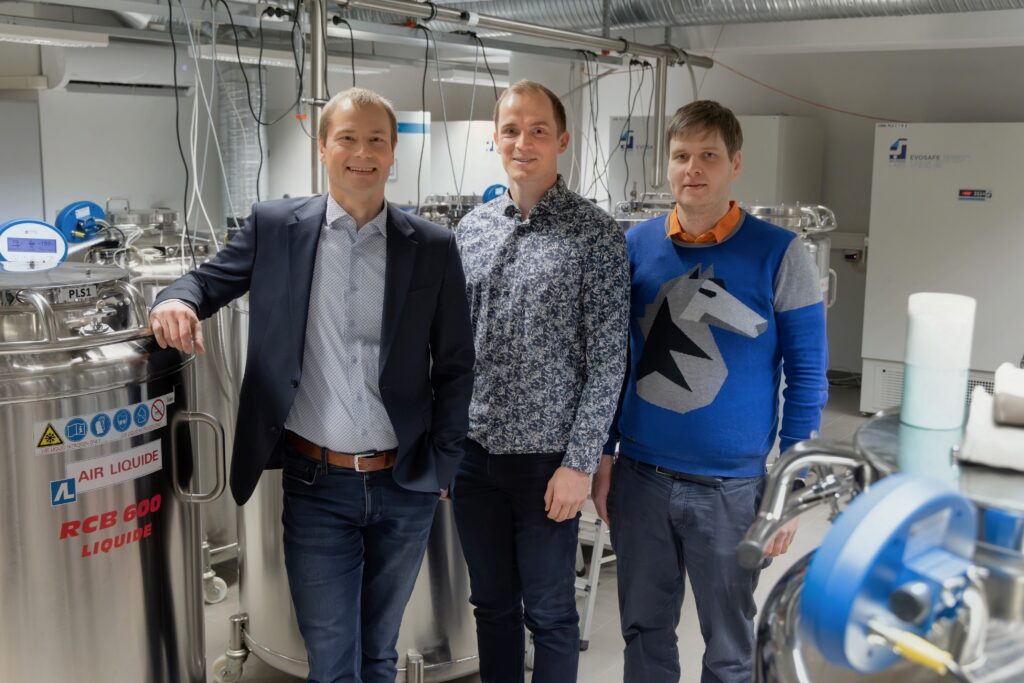
The study included 619,372 individuals
According to Ralf Tambets, Junior Research Fellow of Bioinformatics, the study analysed 249 circulating metabolites that reflect different aspects of human metabolism. “While a standard blood test provides information on a handful of markers, we examined metabolism much more broadly and in far greater detail,” Tambets said. The goal was to create an accurate map of the associations between genetic variants and the metabolic processes they influence, and to understand which of these may be causally linked to diseases such as cardiovascular disease or type 2 diabetes.
The results show that metabolism is regulated by a tightly interconnected system. In total, the study identified 88,604 associations between genetic variants and metabolites across the data of 619,372 individuals.
“When you find this many associations, the first task is to understand what is cause and what is effect. Not all 88,000 associations mean that a single gene directly affects many metabolites – most reflect very indirect influences,” explained Associate Professor of Bioinformatics Kaur Alasoo. Therefore, more advanced analytical methods were used to identify the genes and biological pathways that directly influence metabolism.
Useful for determining effective treatments and guiding future research
While previous studies have linked elevated levels of certain amino acids to type 2 diabetes, the new research shows that this relationship is likely not causal. This means that lowering these amino acids with medication would not help prevent diabetes. “Large datasets alone are not enough to uncover causal relationships – you also need a very good understanding of biological mechanisms,” noted Alasoo.
“In future research, this dataset gives us a broad foundation for understanding the pathophysiology of various diseases more deeply and for identifying their causal and drug-targetable factors more precisely,” Palta summarised. “This is particularly valuable for studying cardiovascular diseases, which remain the leading cause of premature mortality in Estonia and Europe, as well as for investigating health conditions such as metabolic dysfunction-associated steatotic liver disease, which is becoming increasingly common and appears earlier in life,“ said Palta.
Read more: https://doi.org/10.1038/s41586-026-10532-5
This article was sent to us by the University of Tartu Institute of Genomics.
If genes and metabolites help map the body’s hidden chemistry, health data-based models show how those signals may one day help detect heart failure risk earlier. New health data-based models help identify heart disease risk earlier.